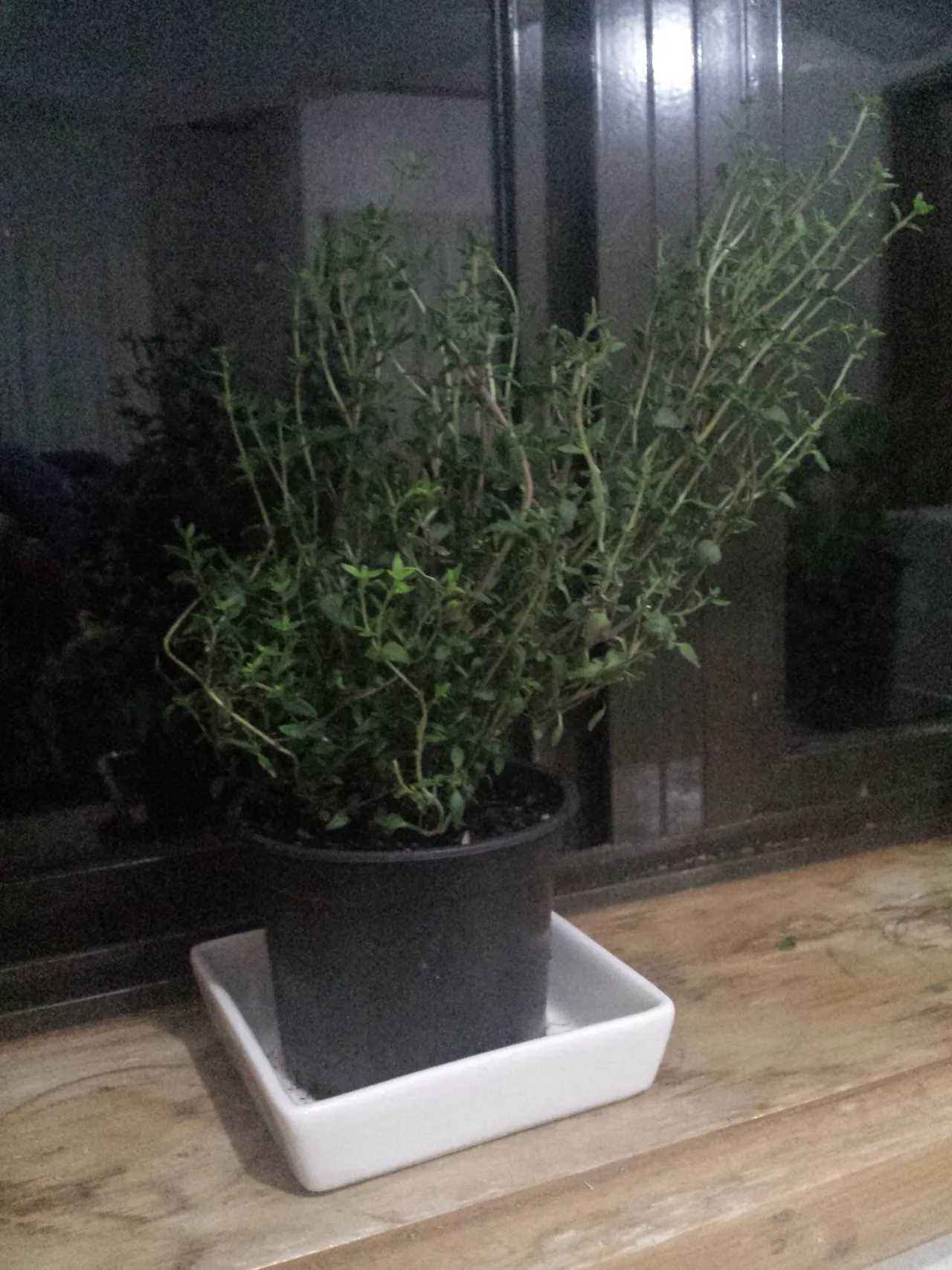
German Thyme
Thymus vulgaris — the winter-hardy kitchen thyme.

Origin
Section titled “Origin”“German” thyme is the winter-hardy strain of common thyme, native to the western Mediterranean, where it grows as a small shrub on dry, sunny ground.
Location
Section titled “Location”Full sun, 41–86 °F, frost-hardy — it survives outside on a balcony where French thyme gives up. It wants lean soil and neglect.
Watering
Section titled “Watering”Every 10 days; let the soil dry out completely between waterings. A light feeder: half-strength feed or a compost top-up every 8 weeks, April to August. The fastest way to kill a potted thyme is kindness.
Pruning
Section titled “Pruning”One real cut, after flowering in July: shear back by a third to keep it from going woody and bald in the middle. Stay above green growth — it will not resprout from old, leafless wood.
Repotting
Section titled “Repotting”Every 2 years in March or April, into gritty, fast-draining mix; terracotta helps. A light root prune at the first spring growth keeps it in the same pot — just keep any same-year top and root work gentle.
In the kitchen
Section titled “In the kitchen”The backbone herb of stocks, stews, and anything braised. Whole sprigs go in early and come out before serving; stripped leaves any time. Thyme dries better than almost any herb — hang surplus sprigs upside down for a week and the flavor keeps for months.
Home medicine
Section titled “Home medicine”Thyme tea is the classic German cough remedy: thymol, its main essential oil, is a proven expectorant and mild antiseptic, approved for coughs and bronchitis in Germany’s Commission E monographs. Steep a teaspoon of dried (or a fresh sprig of) thyme in hot water for ten minutes, with honey to taste.