Lavender
Lavandula angustifolia — the fragrant Mediterranean shrub bees and sleep both approve of.
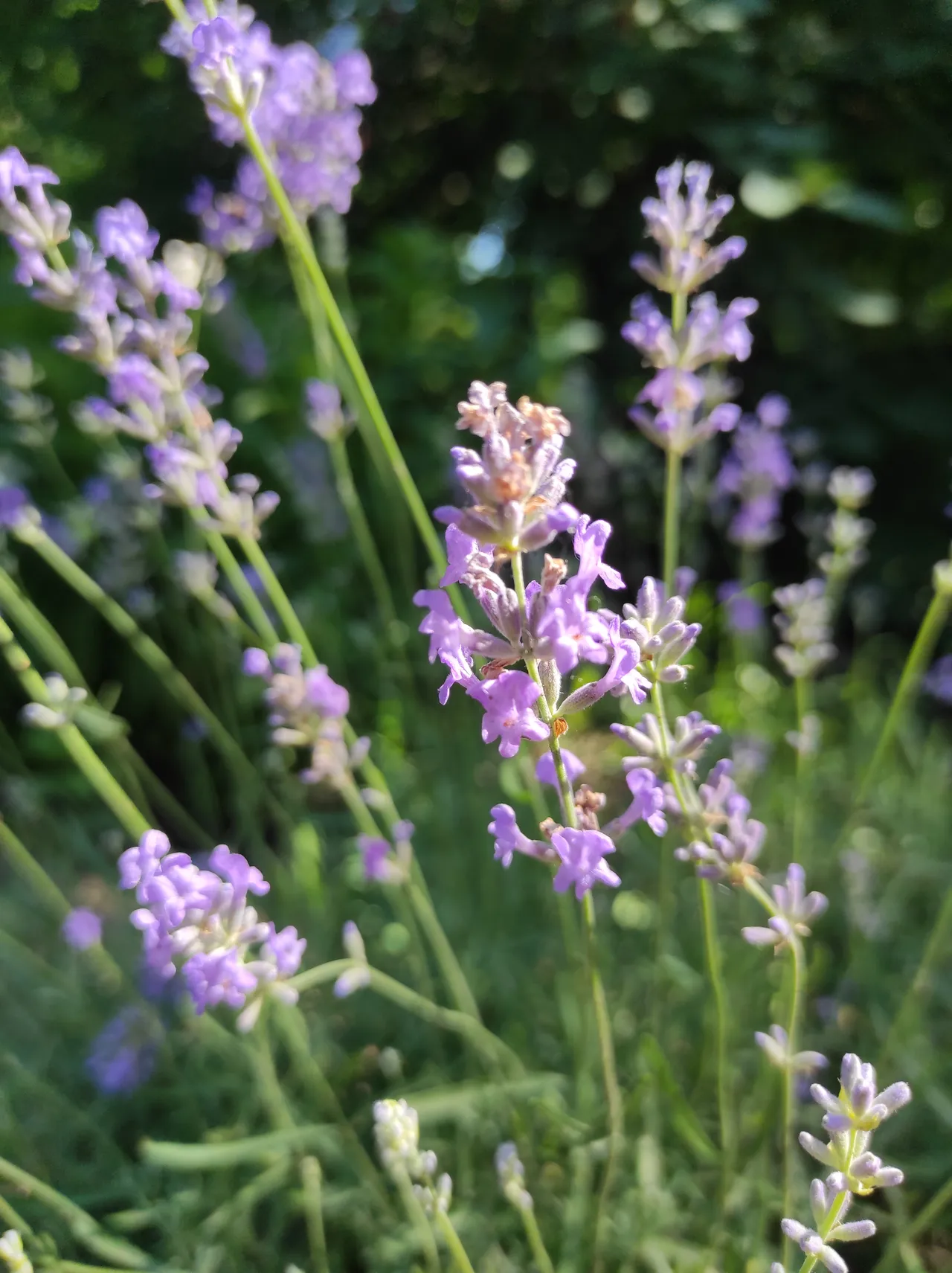

Origin
Section titled “Origin”Grows on the sun-baked mountainsides of the western Mediterranean, alongside thyme and rosemary. The mountains explain its frost-hardiness — “English” lavender is the hardy, sweet-scented species worth potting.
Location
Section titled “Location”Full sun. Handles 23–86 °F and overwinters outdoors in a protected pot.
Watering
Section titled “Watering”Water weekly and let the mix dry out in between; winter pots barely need any. Feed leanly every 8 weeks, April to August — overfeeding costs fragrance and flowers.
Pruning
Section titled “Pruning”Cut back by a third right after flowering in August, never into leafless wood — it won’t regrow from it. Harvest flower spikes as the buds open and fold the harvest into the same prune.
Repotting
Section titled “Repotting”Every 2 years in early spring, into a gritty, slightly alkaline mix — terracotta over plastic. Never root-prune; lavender resents root disturbance. When a plant turns woody and sparse, a rooted cutting inherits the pot.
Home medicine
Section titled “Home medicine”Commission E approves the flowers for restlessness and trouble falling asleep; a standardized lavender-oil capsule (silexan) is licensed in Germany for anxious restlessness. At home: lavender tea (a teaspoon of dried flowers, steeped ten minutes), a sachet under the pillow, or a few drops of oil in an evening bath.