Sage
Salvia officinalis — the gray-leaved Mediterranean shrub of the kitchen canon.
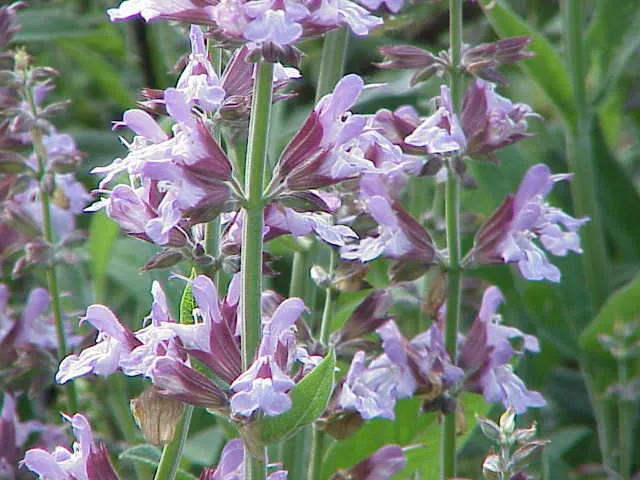

Origin
Section titled “Origin”Comes from the Mediterranean and the Balkans, from the same sun-baked scrub as rosemary, thyme, and lavender. The soft gray felt on its leaves is drought armor.
Location
Section titled “Location”Full sun, all day, and it’s reliably frost-hardy in return. Winter kills with water, not cold: a soggy pot rots sage that laughs at frost.
Watering
Section titled “Watering”Water weekly, let the soil dry in between, never leave it standing in water — and keep the winter pot nearly dry. A light feeder: half-strength feed every 8 weeks, April to August.
Pruning
Section titled “Pruning”One real cut a year: a third off in April as new growth shows, which keeps it from turning into bare-legged wood — like rosemary and lavender, it won’t resprout from leafless stems. Harvest leaves freely through the season; steady picking is free pruning.
Repotting
Section titled “Repotting”Every 2 years in early spring, into a gritty, fast-draining mix — terracotta helps. When a plant goes woody after four or five years, a summer cutting inherits the pot; sage roots as readily as its relatives.
In the kitchen
Section titled “In the kitchen”The herb of brown butter, saltimbocca, sausage, and stuffing — resinous enough to stand up to fat and long cooking. Fry whole leaves crisp in butter for pasta or squash; a little goes far. Frozen leaves keep closer to fresh than dried.
Home medicine
Section titled “Home medicine”Sage tea is the classic gargle: Commission E approves sage leaf for inflammations of the mouth and throat, and as tea for excessive sweating. Steep a teaspoon of dried (or a few fresh) leaves ten minutes; gargle warm for a sore throat, or drink it cooled against night sweats.