Rosemary
Salvia rosmarinus — the Mediterranean shrub that thinks your pot is a cliffside.
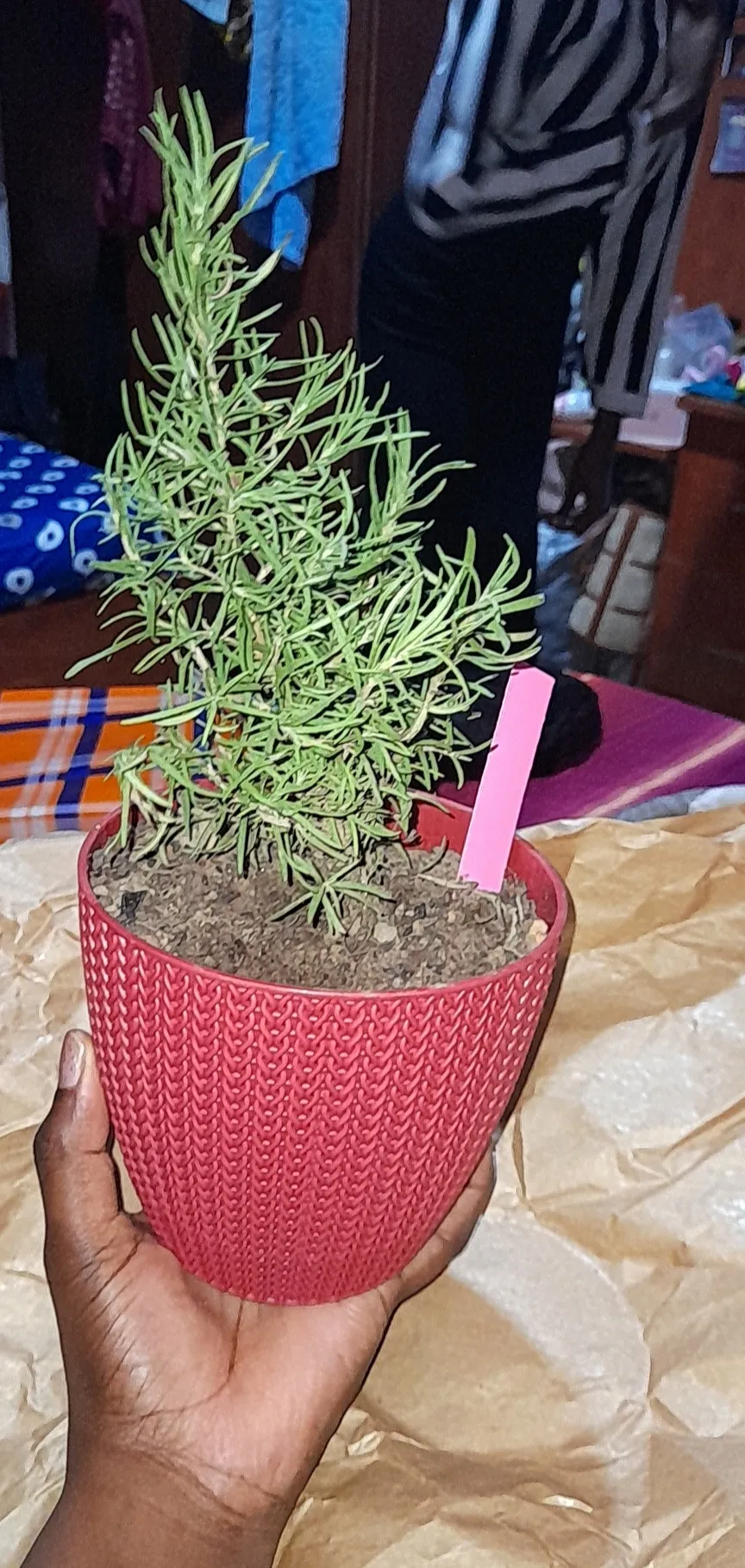

Origin
Section titled “Origin”Grows on the sun-baked sea cliffs of the Mediterranean — the name likely comes from ros marinus, “dew of the sea.” Botanically now a sage, reclassified from Rosmarinus officinalis to Salvia rosmarinus in 2017.
Location
Section titled “Location”Full sun on a hot, dry balcony — the closest thing to home. Takes light frost in a sheltered pot; in hard-frost climates overwinter against a house wall or in a cold, bright stairwell — it wants a cool rest, not a heated living room.
Watering
Section titled “Watering”Water weekly, let the soil dry in between, and never leave it standing in water — soggy soil kills more potted rosemary than any winter. A light feeder: half-strength feed every 8 weeks, April to August.
Pruning
Section titled “Pruning”Shape lightly after flowering, never into bare wood — old wood rarely resprouts, and one hard cut ends most potted rosemary. Ration the knife: a light top prune or a light root prune per year, not both.
Repotting
Section titled “Repotting”Every 2 years in early spring, into a gritty, fast-draining mix — a clay pot forgives overwatering. If it has outgrown its pot, prune one end per spring and leave the other for next year.
In the kitchen
Section titled “In the kitchen”The resinous needles stand up to long, hot cooking like almost nothing else: roast potatoes, focaccia, lamb, anything grilled. Use whole sprigs and fish them out, or chop the needles fine — and halve the amount when using dried.
Home medicine
Section titled “Home medicine”Commission E approves rosemary leaf for digestive complaints and, externally, for supporting circulation — the oil shows up in warming baths and liniments. A tea of a fresh sprig is a traditional pick-me-up; the scent rubbed from a leaf is the quickest form of it.